
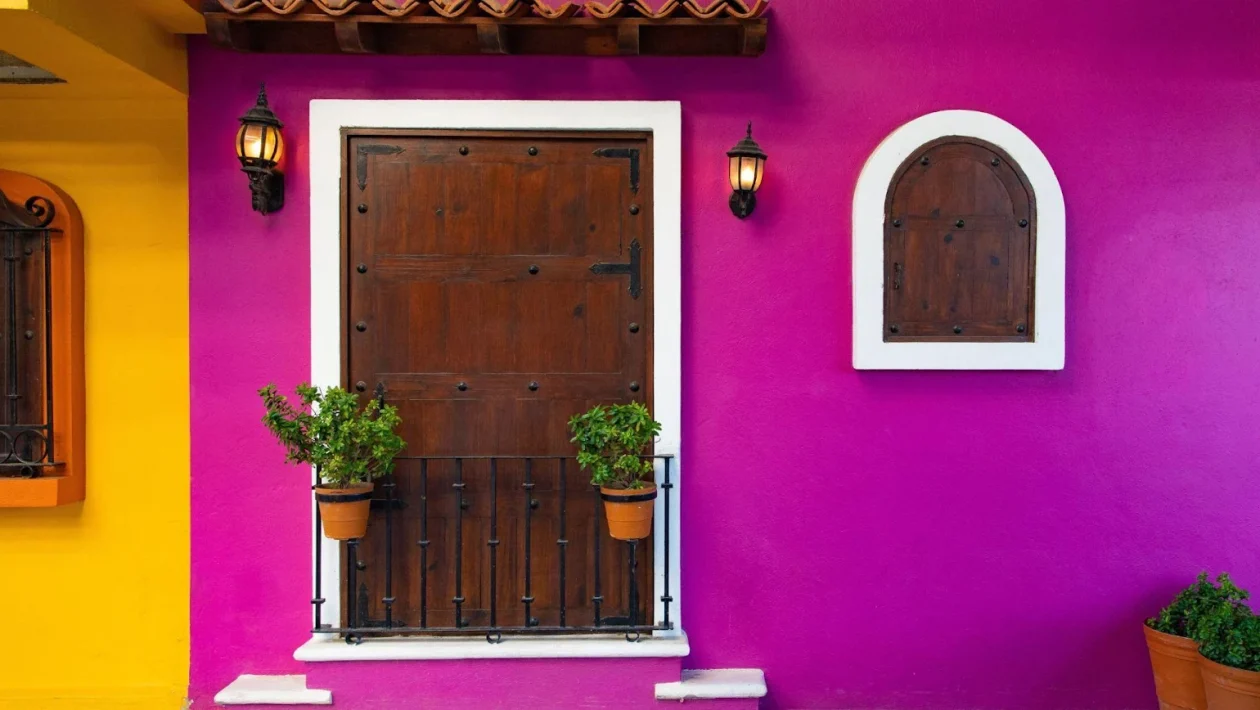
Violet can give an exterior a distinctive identity, but doors and windows decide whether the overall scheme feels settled or disjointed. Their colour, material and finish should support the wall rather than compete with it.
Before finalising the combination, consider the shade of violet, the amount of sunlight the façade receives and the colours already present on the roof, railings and paving.
Table of Contents
Begin with the Violet Undertone
Not every violet behaves in the same way outdoors. Some shades lean towards blue and appear cooler, while others carry more red and feel warmer.
When selecting exterior wall paints, view the chosen violet beside the actual door and window materials. Strong sunlight may make it appear lighter, while shaded sections can bring out its deeper undertones. A wall sample is more dependable than judging the colour from a screen alone.
Use White for Clear Definition
White doors and window frames create a clean break around violet walls. The pairing can make openings easier to notice and prevent a mid-tone violet façade from looking visually heavy.
Choose a softer white when the violet has a warm or dusty base. A sharper white may sit better with a blue-leaning violet. Keep the same white across frames, trims and ledges so the exterior does not appear fragmented.
Bring in Grey for a Quieter Finish
Grey can reduce the intensity of violet without weakening its character. Light grey frames suit darker walls, whereas charcoal can give pale violet more structure.
Check whether the grey carries a blue, brown or green undertone. An unrelated undertone may make the door look separate from the façade. Repeating the selected grey on gates or railings can help connect the exterior surfaces.
Understand the Shade before Pairing
The answer to ’How to make Violet colour?’ begins with red and blue. More blue creates a cooler violet, while additional red produces a warmer result. This distinction is useful when choosing colours for doors and windows.
Cool violet generally sits comfortably with crisp white, grey or dark blue. Warmer violet can work with cream, muted brown or natural wood tones. The goal is to follow the undertone already present in the wall colour.
Keep Wood Tones Visually Balanced
Wooden doors can soften violet exterior walls and introduce a natural surface. Medium and dark wood tones usually provide enough contrast, while very reddish wood may compete with warm violet.
Window finishes do not need to copy the entrance door exactly. They should, however, belong to the same colour family. A restrained frame colour lets the main door remain the focal point.
Choose a Suitable Exterior Product
Colour planning must be supported by paint designed for outdoor surfaces. Suraksha Plus may be considered for a violet façade where colour retention is an important part of the product selection. The final coating system should also suit local weather, surface condition and preparation requirements.
Test the Complete Combination
Paint sample areas near a door and a window instead of testing the violet on an isolated wall. Observe the combination in direct sun, shade and evening light. Also check it against fixed elements that will not be repainted.
Final Thoughts
Violet exterior walls look more considered when doors and windows respond to the shade’s undertone. White gives definition, grey brings restraint, and wood adds warmth. Test the wall colour beside every major material before work begins.
A coordinated palette, suitable exterior paint and careful surface preparation can produce a façade that feels unified rather than assembled in separate parts and remains visually balanced from the street throughout changing daylight.